Factory Floor
Workshop Gallery: How a Custom Knit Order Is Actually Made
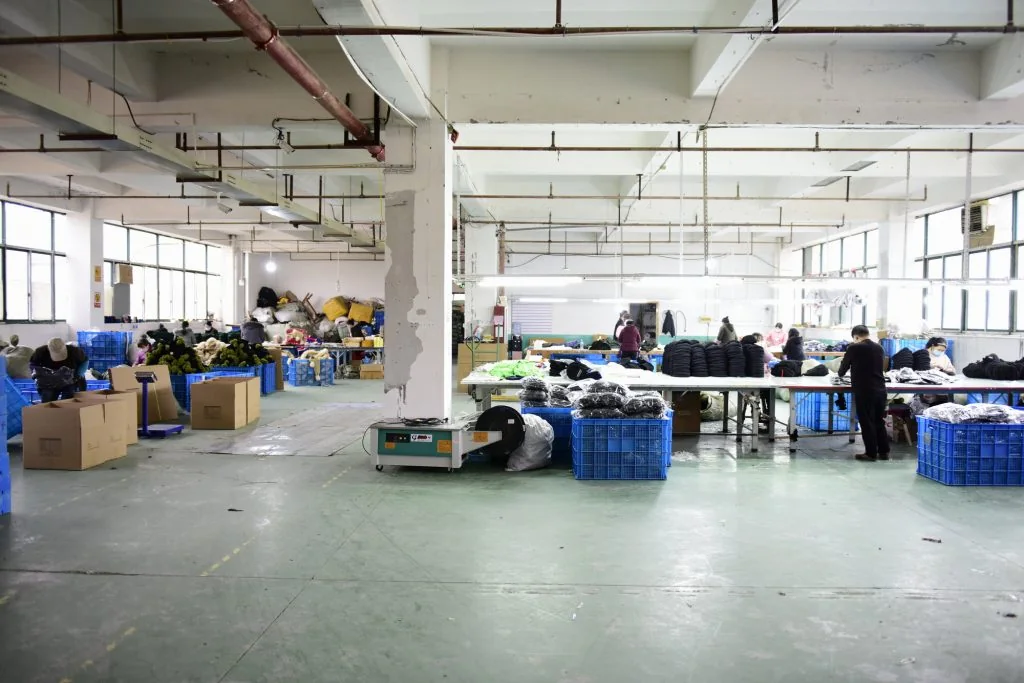
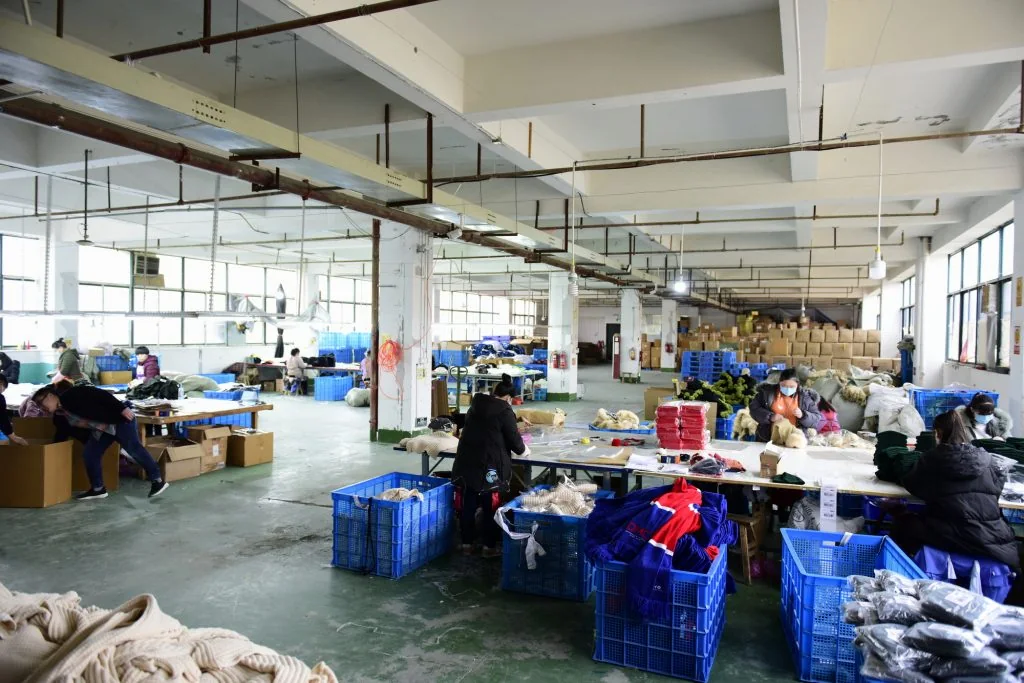
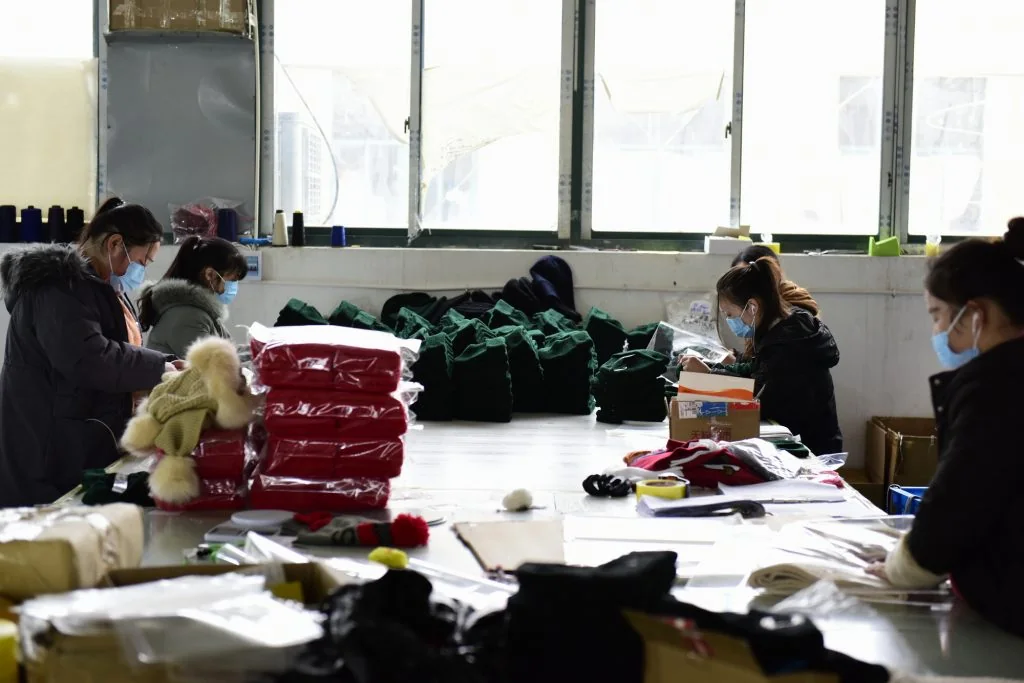
12 photographs from the knitwear and cap workshop, grouped by the stage they belong to — knitting, assembly, finishing, packing and the finished-goods store. They were taken during production runs, so what you are looking at is the line doing real orders rather than a staged photograph.
Stage 01
Knitting
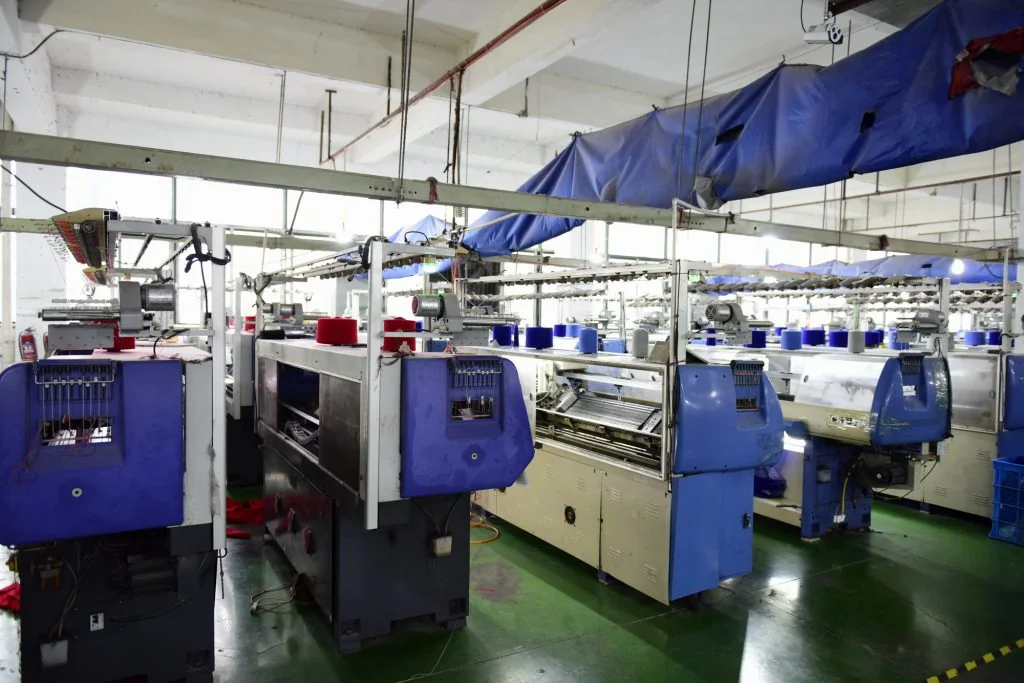
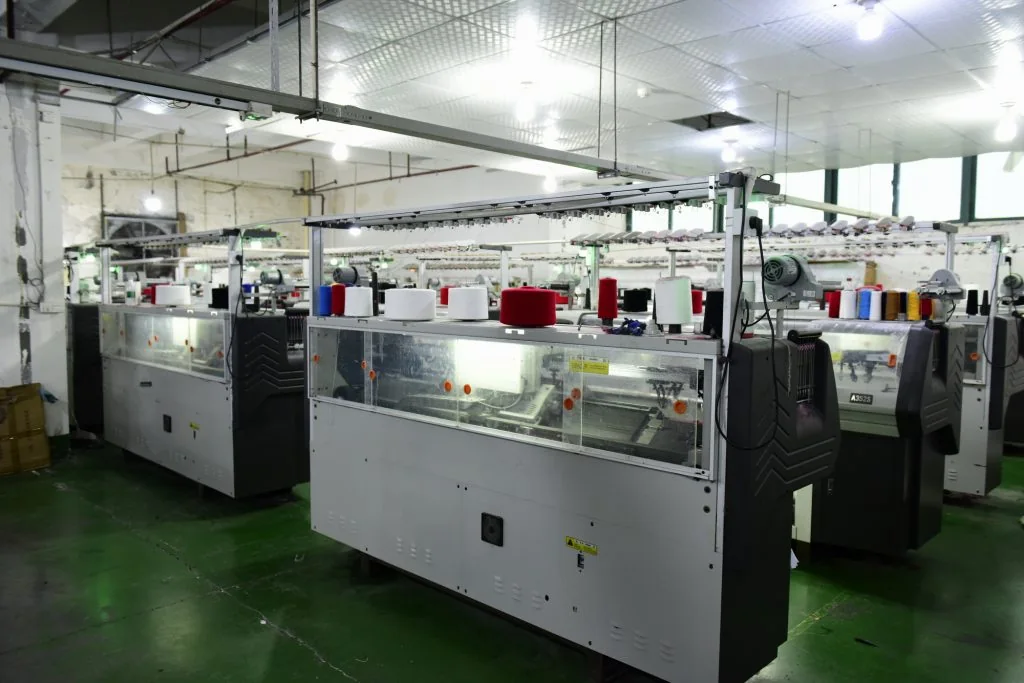
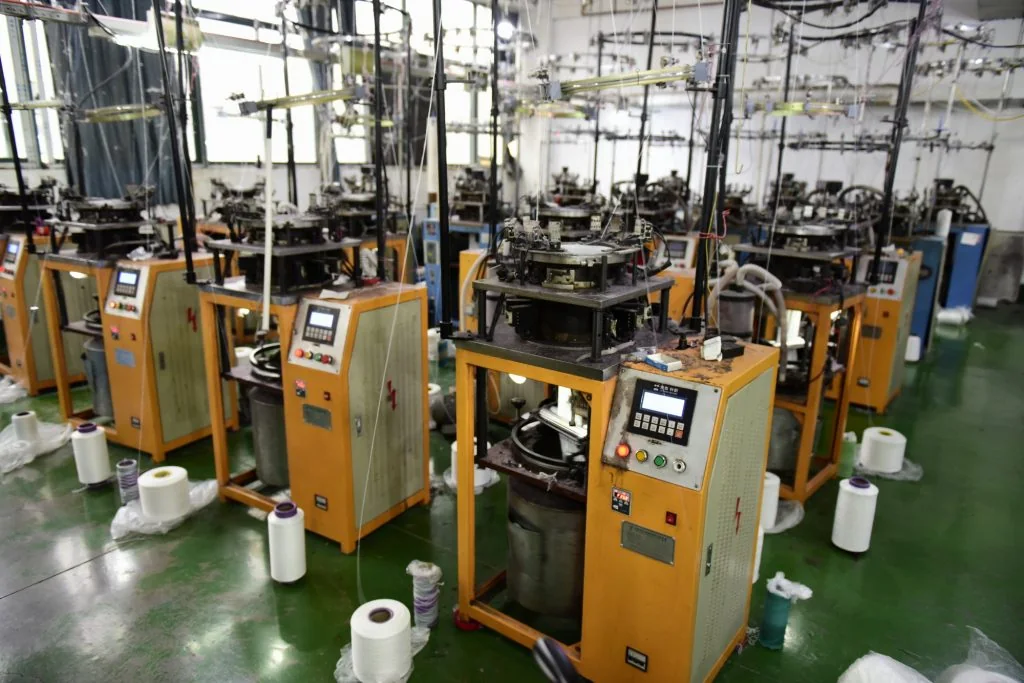
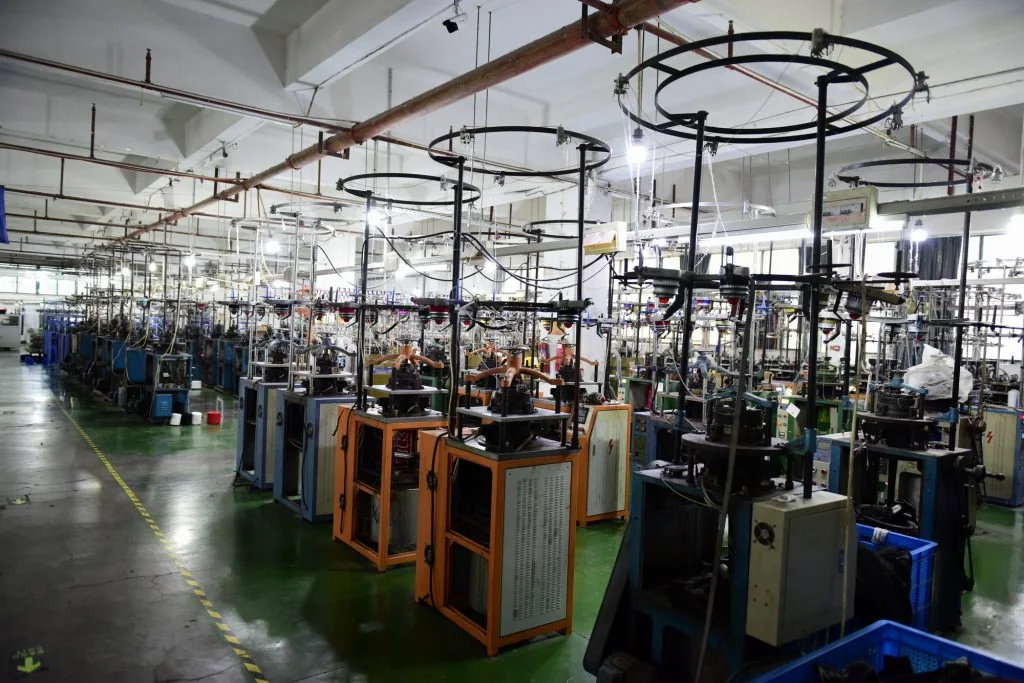
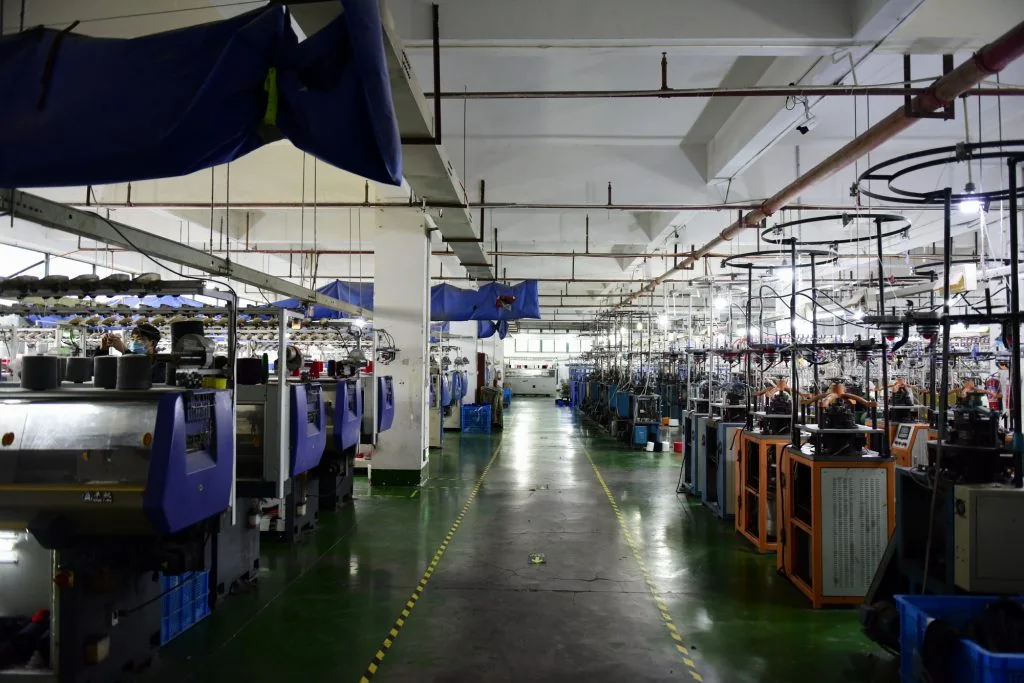
Knit headwear starts on the machine, not at the sewing station. Flat-bed machines run the panels for beanies and knit scarves; circular machines run continuous tubes for sock-style and seamless knits. Both are programmed per size and per structure, so gauge, rib height and pattern repeat come from the programme rather than from an operator judgement call.
Stage 02
Assembly and sewing
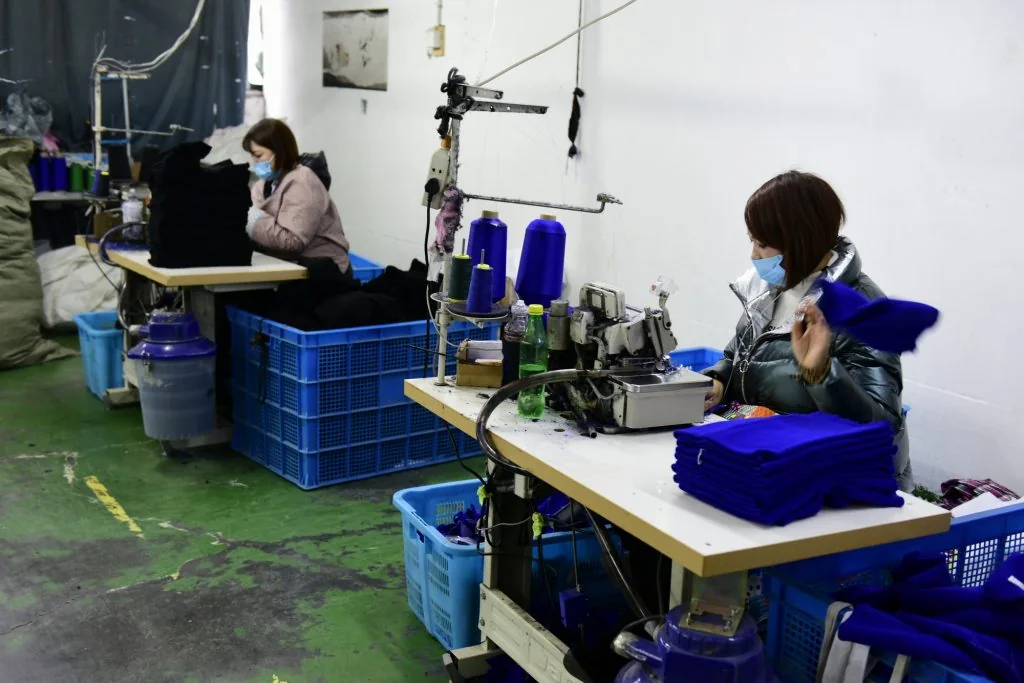
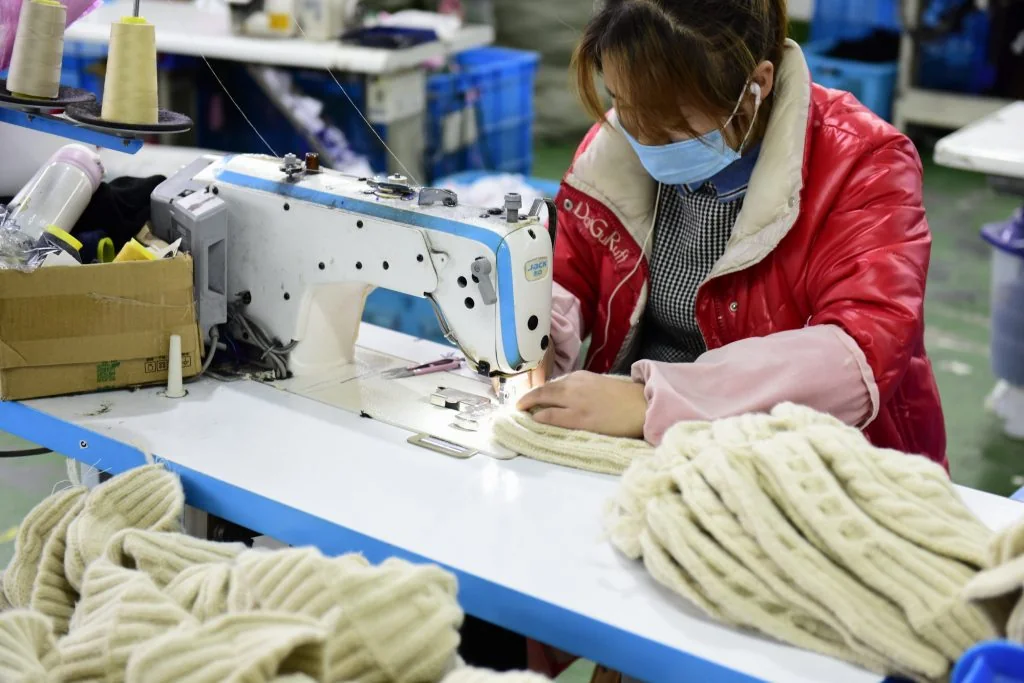
The panel comes off the machine flat and is joined by hand at the sewing station. On a cuffed beanie this means closing the crown, attaching the cuff and setting any pom or tab. It is the stage where a knit garment can go wrong quietly — a pulled seam or a mismatched rib is obvious on the head, so the seam is checked against the approved sample as it is closed, not afterwards.
Stage 03
Finishing
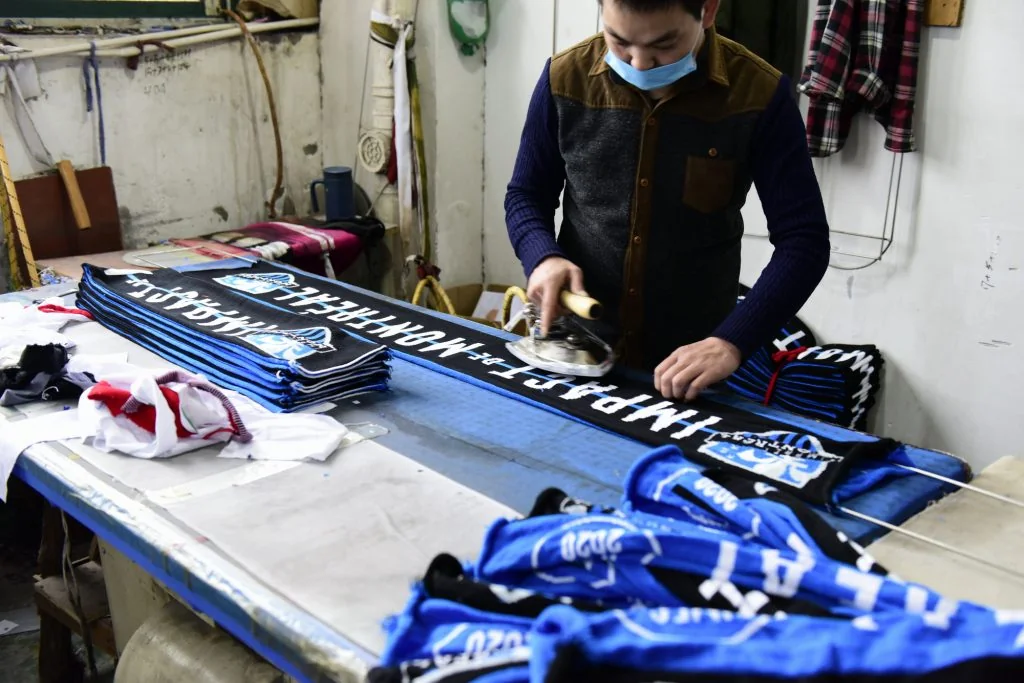
Knit fabric relaxes after it leaves the machine, and a scarf or a large knit panel will not hold its final dimensions until it has been stabilised. Heat setting fixes the width and length, holds the hand feel you approved at sampling, and stops the piece relaxing again after the first wash.
Stage 04
Packing and pre-shipment photos
Every piece is folded, labelled and bagged to the packing instruction agreed at quotation — poly bag, header card, hang tag, retail carton or bulk carton. Before the cartons close, we photograph the finished order against the approved sample, so you see the actual goods leaving rather than a stock image.
Stage 05
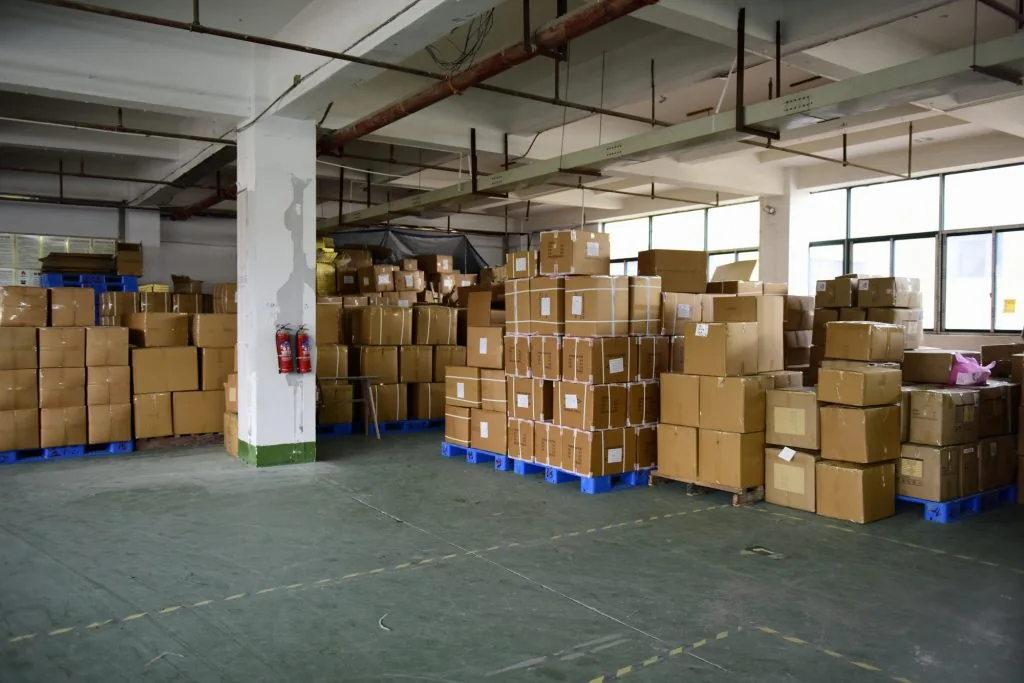
Finished goods store
Completed orders are staged in the finished-goods area by order number and carton marking. This is what makes a repeat order predictable: the carton marking, packing layout and product specification are already on file, so the second run matches the first instead of being rebuilt from memory.
What these photographs are for
When you are choosing a knitwear supplier you are being asked to send money to a workshop you have never stood in. Most supplier pages do not help with that, because they show a hero shot of a machine and a paragraph of adjectives.
The photographs on this page are grouped by process on purpose. If you are ordering beanies, look at the knitting and assembly stages. If your order has a packing instruction and a retail carton, look at packing. If you need to know whether the knit will still measure the same after washing, look at heat setting. Each stage tells you whether the order you are describing is something this line does every week.
The written stages above describe what each machine and station is doing, in the order your order moves through them. If a stage is missing from your requirement — a structure we have not run, a yarn we have not held, a packing format we have not built — tell us at the quote stage and we will say so before you commit rather than after sampling.
Questions about the workshop photographs
+Are these photographs of your own workshop?
Yes. They were taken on our production floor in Huangyan District, Taizhou, Zhejiang during live orders — knitting, assembly, heat setting, packing and the finished-goods store. They are working photographs, not a staged catalogue shoot, which is why you can see the same stations that run your order.
+Why is there no quality-control or inspection section?
Because we do not sell inspection as a service line. What we commit to in writing is simpler and verifiable: a free artwork proof, a physical sample you approve before bulk production, and photographs of your finished goods before they ship.
+Can I see a specific machine or process before ordering?
Yes. Tell us which process your order depends on — jacquard knitting, flat-bed rib, heat setting, a particular packing format — and we will photograph that station for your specification rather than pointing you at a generic gallery.
+Can I visit the workshop?
Yes. Buyers are welcome to visit the workshop in Taizhou. Message us on WhatsApp or use the contact form and we will arrange a time that fits your travel schedule.
+Do the photographs show your full production capacity?
No. This is the knitwear and cap line only. A gallery can show you what a workshop does, not how much it can do, so treat the stages as a capability list and confirm volume against your quantity at the quote stage.
Keep looking
Equipment List
The machines behind each stage, by process.
Our Factory
Where the workshop is and how the line is organised.
Full Gallery
Finished caps, decoration close-ups and product shots.
Sample Process
From artwork proof to approved sample.
Custom Beanies
Cuffed, uncuffed and pom beanies in ribbed and jacquard knits.
Cap Fabric Guide
How each fabric behaves on the head and under the needle.
Cap Specifications
The six parameters that define a custom hat.
Request a Quote
Send your spec, quantity and logo.