Buyer Comparison
5-Panel vs 6-Panel Caps: What the Difference Actually Changes
Panel count is the first decision that changes everything downstream — how big your front logo can be, whether the crown reads structured or soft, how many seams cross the print area, and how the cap costs out. This page compares the two constructions side by side.
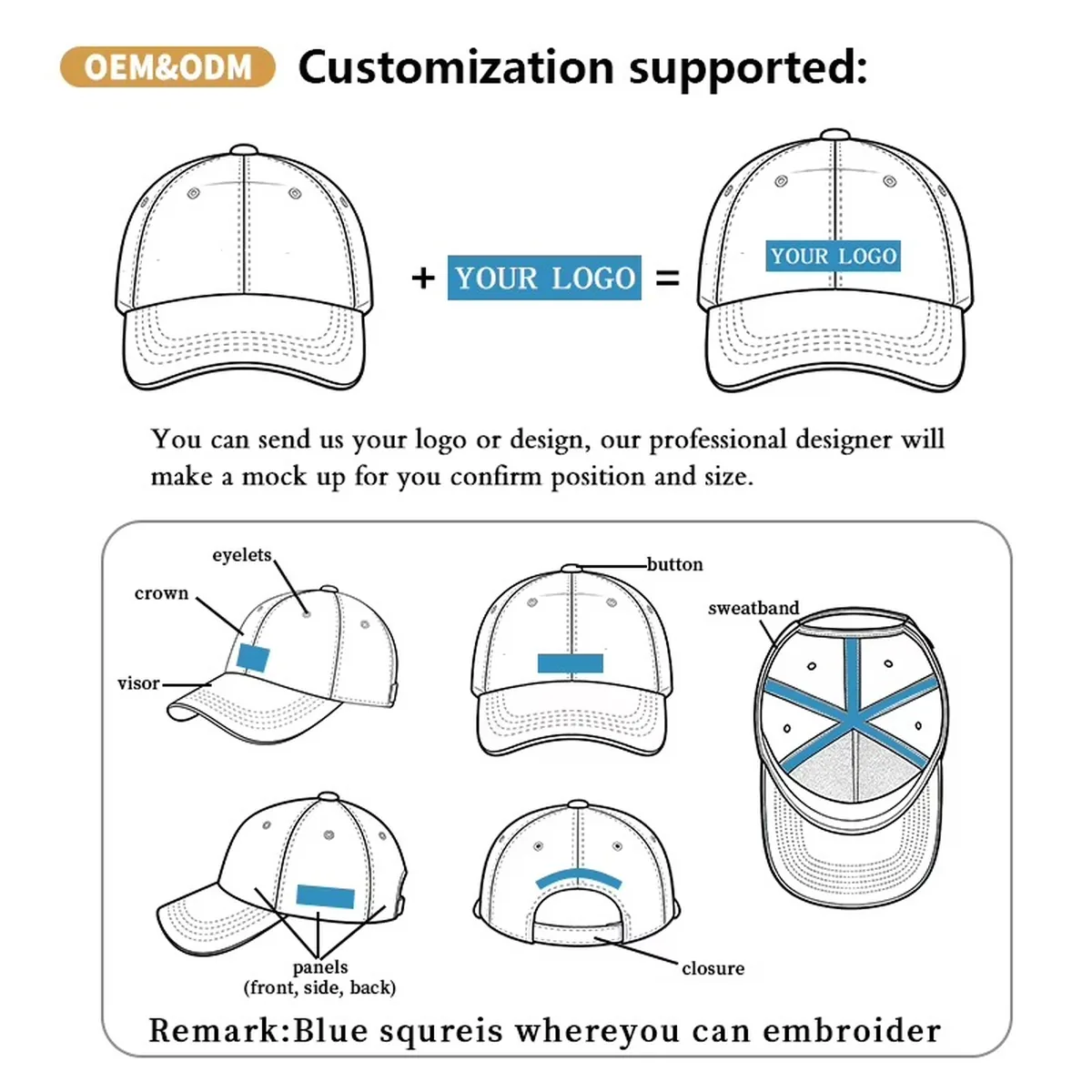
What the two constructions actually are
A six-panel cap is the classic baseball construction: two front panels, two side panels and two back panels, meeting at a button on top. The front seam runs down the centre of the crown, splitting the front into two halves.
A five-panel cap drops that centre seam. The front is cut as one piece with two side panels and two back panels behind it. On some five-panels the front is a single seamless panel; on others the front is two panels joined without the traditional vertical centre seam.
That single structural difference — one seam — is the reason the two caps feel different on the head, photograph differently, and quote at different prices.
What it changes for your logo
The centre seam is the deciding factor for front decoration. On a six-panel, a wide logo crosses that seam, which means the embroidery or print sits on a slightly raised ridge. A good digitised file handles it, but the seam is always there.
On a five-panel with a seamless front, the same logo sits on one flat surface. That is why five-panels dominate designs with wide or highly detailed front artwork — including print-heavy and sublimated designs.
Panel count also changes the usable height of the front area. A taller crown gives you more vertical room before the logo runs into the button. If your artwork is square or tall rather than wide, crown profile matters as much as panel count.
How to choose between them
Start from the artwork, not the style name. Wide, detailed, print-based fronts point to a five-panel with a seamless front. Narrow, tall, embroidery-based logos work on either, so the decision falls back to the look you want.
Then decide the crown. Streetwear and skate-adjacent programs usually want a mid or high crown with a flat bill. Corporate and promotional programs usually want a lower, softer crown with a curved bill.
If the order has to cover a wide range of head sizes without a size run, the closure ends up doing more work than the panel count. That is a separate decision — see the closure guide.
Buyer Risk Check
Where this project can go wrong
Choosing the panel count after the artwork
A wide print design committed to a six-panel will always carry a seam through the middle of it.
Assuming five-panel means unstructured
Five-panels can be structured. Structure comes from the backing behind the front panel, not from the panel count.
Ignoring crown height
Two caps with the same panel count can look unrelated if one is low and one is high. Crown is a separate parameter.
Mixing constructions across one order
One order, two constructions means two samples, two cut plans and two approval steps. Decide once.
Parameter Charts
Cap panel count — construction and what it changes
| Panels | Construction | Front logo area | Crown character | Typical use |
|---|---|---|---|---|
| 5-panel | Five panels, front is one wide panel or a split pair | One broad flat area — widest and tallest usable front space | Lower and flatter, casual, sits close to the head | Streetwear, camper caps, wide wordmark or full-front logos |
| 6-panel | Six panels, symmetric front pair with a centre seam | Two front panels with a centre seam — smaller than 5-panel but symmetric | The industry default; balanced height and shape | Baseball caps, trucker caps, corporate and event hats |
| 6-panel seamless | Six panels with a bonded or laser-cut front, no visible front seam | Continuous flat front with no seam line crossing the artwork | Same as 6-panel but a cleaner face | Full-front prints, sublimation, large detailed artwork |
| 7-panel / multi-panel | More panels, minor seams, rounder crown | Similar to 6-panel, often narrower | Rounded and closer-fitting | Specialty and fashion shapes; confirm per style |
Panel count decides the seam layout, how much flat front area you get for a logo, and how the crown sits. It is usually the first thing a buyer specifies.
Crown profile — height and structure
| Profile | Crown height | Structure | How it wears | Typical use |
|---|---|---|---|---|
| Low profile | Shallow, roughly 3.5 in / 89 mm | Usually unstructured | Sits low and close; soft, relaxed look | Dad hats, casual retail, garment-washed styles |
| Mid profile | Standard, roughly 4 in / 102 mm | Structured or unstructured | The balanced default that suits most wearers | Most corporate, promotional and team caps |
| High profile / high crown | Taller, roughly 4.5 in / 114 mm | Structured | More volume above the head; reads as streetwear | Flat-brim snapbacks, fashion and music merchandising |
| Unstructured (soft crown) | Varies | No buckram in the front panels | Collapses flat, packs well, soft against the forehead | Giveaways, travel, retail-soft looks, low-profile dad hats |
| Structured | Varies | Buckram-backed front panels | Holds a crisp shape, keeps a flat face for embroidery | 3D puff embroidery, trucker caps, premium corporate programs |
Profile is the crown height and whether the front panels are backed. Two caps with the same panel count and the same fabric can look completely different because of this.
Need a combination that is not listed? Send your specand we will confirm what the factory can hold before you commit.
What we confirm before production
Every order is quoted by the actual spec, sampled for approval, and checked against the approved sample before shipping.
Construction chosen against your artwork
We review the logo file first and tell you which construction reproduces it cleanly.
Both constructions available
Five-panel, six-panel and seamless-front six-panel are all made in the same workshop, so the comparison is honest.
One written spec per order
Panel count, profile, closure, bill and fabric are confirmed in writing before sampling.
Sample before bulk
Nothing goes into production until you have approved a physical sample against the written specification.
Common questions
Not always. Some five-panels are cut with a single seamless front panel; others join two front panels without the traditional centre seam. If a seam-free front matters for your artwork, say so in the brief.
A five-panel with a seamless front. A wide logo on a six-panel crosses the centre seam, which shows in both embroidery and print.
Panel count changes the number of cut pieces and seams, so it affects labour. Fabric and decoration usually move the unit price more than panel count does. Ask for both constructions on the same specification if price is the deciding factor.
Yes. Structure comes from buckram backing behind the front panel. Panel count and structure are independent decisions.
A five-panel or a high-crown six-panel. Flat bills are normally paired with a mid or high crown; a low crown with a flat bill tends to look like a dating error rather than a design choice.
Both can, on a structured front panel. Thin fabric can pucker under a dense 3D fill, so the fabric choice matters more than the panel count here.
It depends on crown height rather than panel count. A taller crown leaves more room above the logo before it reaches the button.
Yes. Comparing two physical samples against the same artwork is the fastest way to decide, and it avoids committing a bulk order to the wrong construction.
Ready to quote this project?
Send your cap style, logo, quantity and destination. We will reply with MOQ, unit price, sample details and shipping options.
The front logo area on each panel count, drawn to scale.
Custom 5-Panel CapsFive-panel construction we manufacture.
Custom 6-Panel CapsSix-panel construction we manufacture.
Cap SpecificationsAll six parameters that define a custom cap.
Crown Height GuideHow crown height changes the look and the logo room.
Custom Baseball HatsSix-panel on the standard cap base.
Custom Trucker HatsFive-panel on a trucker build.
Request a QuoteSend artwork and quantity for a factory-direct quote.