Specification Guide
Cap Fabric Weight Guide: What GSM Actually Changes
Fabric weight is quoted in grams per square metre, and it is the number behind most of the differences buyers describe as quality. It changes how a crown holds, how a logo sits, and how the cap behaves after a season of wear.
What weight describes, and what it does not
GSM is the mass of one square metre of fabric. It is a weight, not a quality score: a heavier fabric is denser and usually more structured, but a lighter performance knit can be the right choice for a warm-weather program.
Weight is often confused with weave. Two fabrics can share a weight and behave differently — a twill and a canvas at the same GSM feel and drape differently because of how the yarns are crossed.
Because of that, weight is quoted alongside the fabric name rather than instead of it. Cotton twill at a given weight and polyester canvas at the same weight are not interchangeable.
What heavier fabric changes in practice
A heavier fabric holds a structured crown more firmly, which is why corporate and retail caps tend to use a mid-weight to heavier twill or canvas.
It also gives embroidery a more stable surface. A dense fill on a heavier woven front is less likely to pull the panel than the same fill on a light fabric.
The trade-offs are warmth, drying time and cost. Heavier fabric is warmer on the head, slower to dry, and more expensive per unit at the same construction.
Choosing a weight for a program
For a warm-weather program or a high-volume giveaway, a lighter fabric with a mesh back is usually right: cooler, cheaper, and the back does not need to carry a logo.
For a retail or uniform cap that has to look substantial and survive repeated wear, a mid-weight to heavier woven front is the better answer.
If weight is the deciding factor and you are working from a reference cap, send us the cap or a swatch. Weight is much easier to match by hand than by description.
Buyer Risk Check
Where this project can go wrong
Treating a higher number as better
GSM is a weight, not a quality score. A light performance knit is right for some programs.
Confusing weight with weave
Twill and canvas at the same GSM feel and drape differently.
Dense fills on a light front
A heavy stitch plan on light fabric can pull the panel.
Matching weight from a photo
Weight is a hand property. A swatch or a reference cap is far more reliable.
Parameter Charts
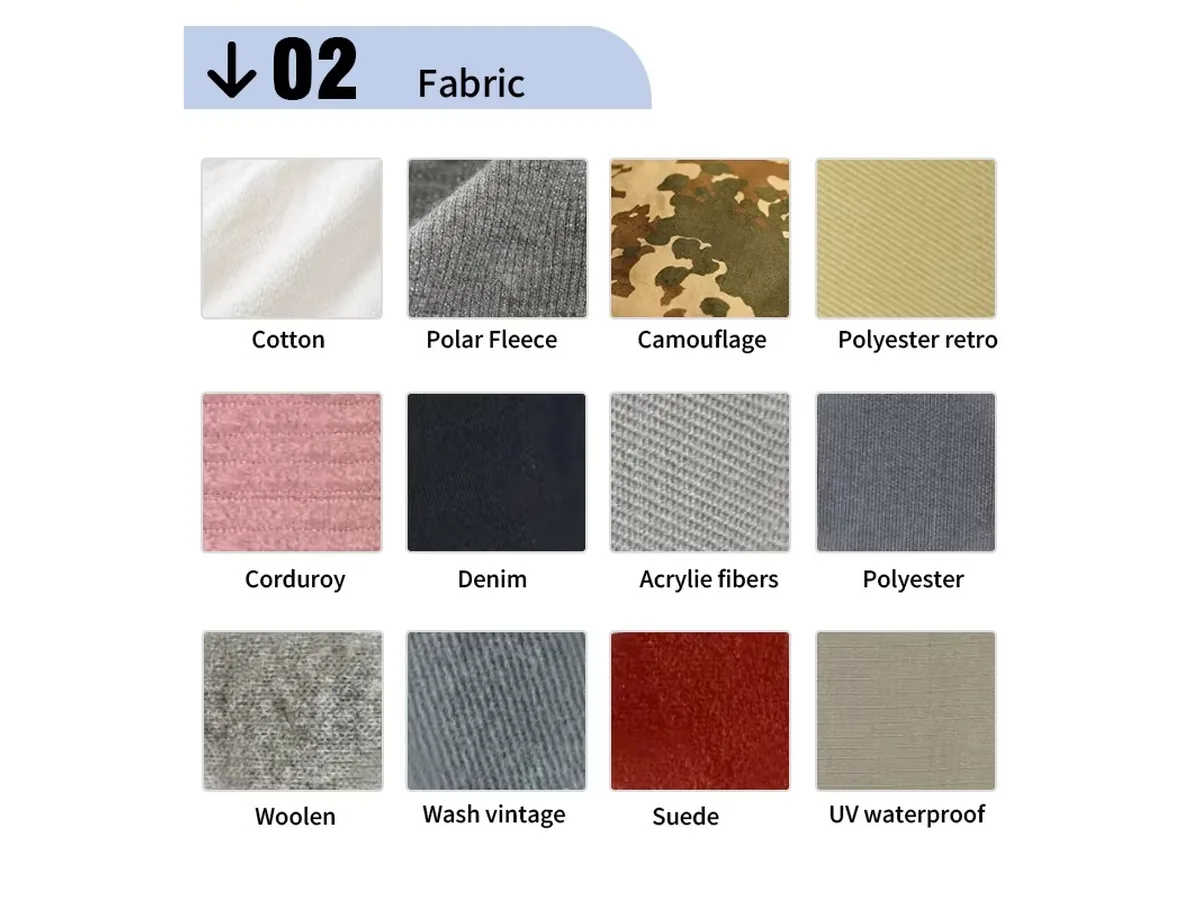
Cap fabrics — how they behave and what they cost you
| Fabric | Hand feel | Colour and shape | Embroidery result | Best for |
|---|---|---|---|---|
| Cotton twill | Soft, classic; softens further with wear | Colour holds well but fades with heavy washing; can crease | Excellent — the standard surface for flat and 3D embroidery | Corporate, retail and team caps where the logo matters |
| Acrylic | Wool-like and slightly crisp | Holds shape and colour strongly; resists fading | Good, but dense stitching can pucker a thin acrylic | Beanies, wool-look caps, budget retail |
| Polyester | Smooth, slightly synthetic | Very colourfast; resists shrinking | Good — but use a compatible backing for dense logos | Performance caps, sublimation, hard-wearing work caps |
| Cotton / polyester blend | Between the two | Better shape retention than pure cotton with more softness than pure polyester | Very good | The all-round choice for mixed programs |
| Brushed cotton | Soft, slightly fuzzy, washed look | Softer handle, colour looks muted by design | Good; the texture softens fine detail | Dad hats, lifestyle and garment-washed styles |
| Canvas | Heavy and firm | Holds a structured shape very well | Very good; takes heavy stitch counts | Structured caps, workwear, premium retail |
| Corduroy | Textured vertical ridges | Rich colour, seasonal look | Usable, but the pile hides fine detail — keep logos bold | Autumn and winter retail, fashion programs |
| Performance knit | Light, stretchy, smooth | Wicking and fast-drying | Light logos only; dense fill distorts the knit | Running, golf, cycling and sport |
| Recycled polyester | Same as polyester | Same as polyester, with a sustainability story | Same as polyester | Brands with a sustainability requirement |
Fabric drives hand feel, colour retention, breathability and how well your logo reproduces. Ask for the fabric weight and composition to be confirmed on the order sheet.
Need a combination that is not listed? Send your specand we will confirm what the factory can hold before you commit.
What we confirm before production
Every order is quoted by the actual spec, sampled for approval, and checked against the approved sample before shipping.
Fabric and weight proposed together
We quote the fabric name with its weight, so the two are never separated.
Swatches before sampling
Where hand feel decides, swatches are sent before a full sample round.
Weight matched to climate
The intended use and climate drive the recommendation rather than a preference for heavier.
Sample before bulk
The bulk run iscompared against the approved physical sample.
Common questions
Grams per square metre — the mass of one square metre of the fabric. It indicates density and weight, not quality on its own.
Not automatically. Heavier fabric holds a structured crown better and takes dense embroidery more stably, but it is warmer, slower to dry and more expensive. Light fabric is right for warm-weather programs.
Yes. Heavier fabric costs more per unit at the same construction, and weight also affects how much fabric each cap consumes.
Yes. Weight and weave are separate. A twill and a canvas at the same GSM feel different and drape differently.
A mid-weight to heavier woven front carries a dense fill with less risk of pulling the panel. Structure behind the front matters as much as weight.
A lighter fabric with a mesh back vents heat better. The mesh section cannot carry embroidery, so the back has to stay undecorated.
Yes. When hand feel or weight is the deciding factor, a swatch saves a full sample round.
Send us the cap or a swatch. Weight is a hand property and much easier to match physically than from a description.
Ready to quote this project?
Send your cap style, logo, quantity and destination. We will reply with MOQ, unit price, sample details and shipping options.
How each fabric behaves on the head and under the needle.
Cotton vs Polyester vs AcrylicFabric families compared for decoration and durability.
Cap SpecificationsFabric as one of the six parameters.
Cap Crown Height GuideHow structure and profile interact with fabric.
Blank Caps WholesaleStock fabric options for decorators.
Custom Rope HatsFabric weight with rope trim.
Request a QuoteTell us the climate and use for a fabric recommendation.