B2B Buying Guide
Hat Decoration: Which Method Suits Which Fabric
Every decoration method has a fabric it works on and a fabric it fails on. This compatibility chart is the one to check before a logo is committed, because the wrong pairing is not a matter of taste — it physically will not work.
The pairings that genuinely fail
Three combinations should be ruled out before anything else is discussed. First, nothing can be embroidered onto a mesh back: polyester mesh is an open knit with no continuous surface for a stitch to sit on. If the logo has to appear on the back, the back panel has to be solid fabric.
Second, sublimation only works on polyester-rich fabric. It dyes the fibres rather than printing on top, so on cotton or canvas the colour will not develop and the print will look washed out or absent.
Third, dense 3D puff on thin acrylic puckers the panel. The raised fill pulls the lightweight fabric out of shape rather than sitting on it. Cotton twill or canvas holds the same logo cleanly.
How to think about the methods that do work
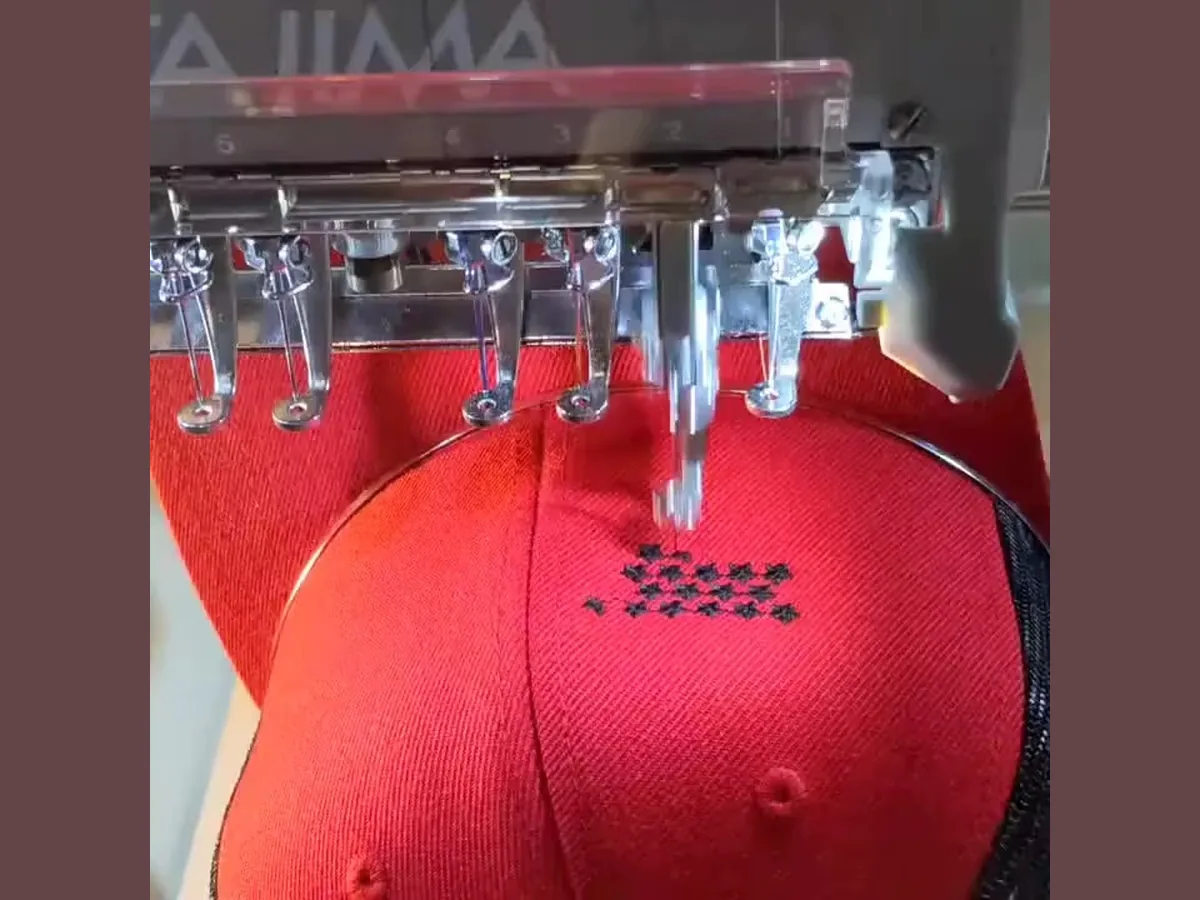
Flat embroidery is the default for a reason: it works on nearly every solid fabric and it reads as durable. If you have no specific requirement, start here.
3D puff adds a raised foam layer under the stitch. It needs a flat, structured front panel, and it is the method most sensitive to fabric choice — but where it fits, the logo reads as a premium feature rather than a mark.
Patches move the logo off the fabric entirely. A woven, leather or PVC patch is produced separately and sewn or bonded on, which is why patches work across fabrics where direct decoration would struggle, including textured ones like corduroy.
Screen print and heat transfer suit large flat graphics rather than fine detail. Sublimation is the outlier: it is the only method that can reproduce a photograph or a full-colour gradient across the whole crown.
Checking a combination before you commit
Work through it in this order: fabric, then panel structure, then decoration. A structured cotton twill front accepts almost anything. An unstructured corduroy front on a curved-bill dad hat narrows the options sharply.
If your artwork is already fixed — a brand guideline, for example — the sensible move is to state it in the brief and let the fabric follow. If the fabric is fixed, tell us and we will propose decoration methods that will actually reproduce it.
Either way, the artwork proof comes before the physical sample. The proof shows placement and scale; the sample is where you confirm that the method reads the way you intended on the fabric you chose.
Buyer Risk Check
Where this project can go wrong
A back logo on a mesh back
Mesh cannot hold a stitch. The order has to change the back panel or drop the back logo.
Sublimation specified on cotton
The colour will not develop. Either change the fabric or change the method.
Fine detail on a textured fabric
Corduroy and heavyweight knits swallow small type. Simplify the logo or move to a patch.
Dense fill on a lightweight knit
Performance knits distort under a heavy stitch. Keep the logo light.
Decoration method against fabric — what actually works
| Decoration | Cotton twill | Polyester | Acrylic | Canvas | Mesh back | Corduroy |
|---|---|---|---|---|---|---|
| Flat embroidery | Best | Best | Good | Best | Not possible | Good |
| 3D puff embroidery | Best | Good | Risky — may pucker | Best | Not possible | Not suitable |
| Chenille patch | Best | Good | Good | Best | Not possible | Not suitable |
| Woven patch | Best | Best | Best | Best | Possible on solid panels only | Good |
| Leather patch | Best | Good | Good | Best | Not possible | Not suitable |
| PVC / rubber patch | Good | Best | Best | Good | Not possible | Good |
| Screen print | Best | Good | Good | Good | Not possible | Ink sits on the ridges — avoid |
| Heat transfer | Good | Best | Good | Good | Not possible | Avoid |
| Sublimation | Poor — cotton takes no dye | Best | Poor | Poor | Not possible | Poor |
Not every decoration method suits every fabric or every front panel. This is the table to check before you commit a logo to a fabric choice.
Cap fabrics — how they behave and what they cost you
| Fabric | Hand feel | Colour and shape | Embroidery result | Best for |
|---|---|---|---|---|
| Cotton twill | Soft, classic; softens further with wear | Colour holds well but fades with heavy washing; can crease | Excellent — the standard surface for flat and 3D embroidery | Corporate, retail and team caps where the logo matters |
| Acrylic | Wool-like and slightly crisp | Holds shape and colour strongly; resists fading | Good, but dense stitching can pucker a thin acrylic | Beanies, wool-look caps, budget retail |
| Polyester | Smooth, slightly synthetic | Very colourfast; resists shrinking | Good — but use a compatible backing for dense logos | Performance caps, sublimation, hard-wearing work caps |
| Cotton / polyester blend | Between the two | Better shape retention than pure cotton with more softness than pure polyester | Very good | The all-round choice for mixed programs |
| Brushed cotton | Soft, slightly fuzzy, washed look | Softer handle, colour looks muted by design | Good; the texture softens fine detail | Dad hats, lifestyle and garment-washed styles |
| Canvas | Heavy and firm | Holds a structured shape very well | Very good; takes heavy stitch counts | Structured caps, workwear, premium retail |
| Corduroy | Textured vertical ridges | Rich colour, seasonal look | Usable, but the pile hides fine detail — keep logos bold | Autumn and winter retail, fashion programs |
| Performance knit | Light, stretchy, smooth | Wicking and fast-drying | Light logos only; dense fill distorts the knit | Running, golf, cycling and sport |
| Recycled polyester | Same as polyester | Same as polyester, with a sustainability story | Same as polyester | Brands with a sustainability requirement |
Fabric drives hand feel, colour retention, breathability and how well your logo reproduces. Ask for the fabric weight and composition to be confirmed on the order sheet.
Need a combination that is not listed? Send your specand we will confirm what the factory can hold before you commit.
What we confirm before production
Every order is quoted by the actual spec, sampled for approval, and checked against the approved sample before shipping.
Compatibility checked before sampling
We review your fabric and decoration together during quoting, so a failed pairing is caught early.
Artwork proof first
You see placement and scale before anything physical is produced.
Method recommended, not just quoted
If your fabric rules out your preferred method, we say so and propose what will work.
Sample before bulk
The finished sample is where you approve how the method actually reads on the fabric.
Common questions
Embroidery. Stitched logos outlast printed ones because there is no ink or transfer film to wear, crack or peel.
No. Mesh is an open knit with no continuous surface to stitch into. Any back logo requires a solid back panel.
A foam layer placed under the stitching, which raises the logo above the fabric surface. It needs a flat, structured front panel to look right.
Not better, different. A patch is produced separately and applied, so it works on fabrics and textures where direct stitching struggles, and it gives a crisper edge on detailed artwork.
Yes, by sublimation — but only on a polyester-rich fabric, and the crown design has to allow for the seams.
Screen print, heat transfer or sublimation depending on the fabric. Embroidery suits logos and lettering better than large filled areas.
Yes. Placement and scale are confirmed on a digital proof before a physical sample is produced.
Yes, and it is common — for example a leather patch on the front with flat embroidery on the side. Each method is reviewed against the panel it sits on.
Ready to quote this project?
Send your cap style, logo, quantity and destination. We will reply with MOQ, unit price, sample details and shipping options.
The full parameter reference for custom caps.
Cap Fabric GuideHow each fabric behaves under the needle.
Embroidered HatsFlat embroidery, the most widely used method.
3D Puff Embroidery HatsRaised logo embroidery on structured fronts.
Leather Patch HatsA premium patch finish for flat front panels.
Woven Patch HatsFine-detail patches that work on textured fabric.
Request a QuoteSend your logo and we will confirm the method and fabric.