B2B Buying Guide
5-Panel vs 6-Panel Caps: What Panel Count Changes
Panel count is the first structural decision on a custom cap. It sets the seam layout, the size and shape of the flat area your logo sits on, and how the crown reads from the front. Here is how to choose between them.
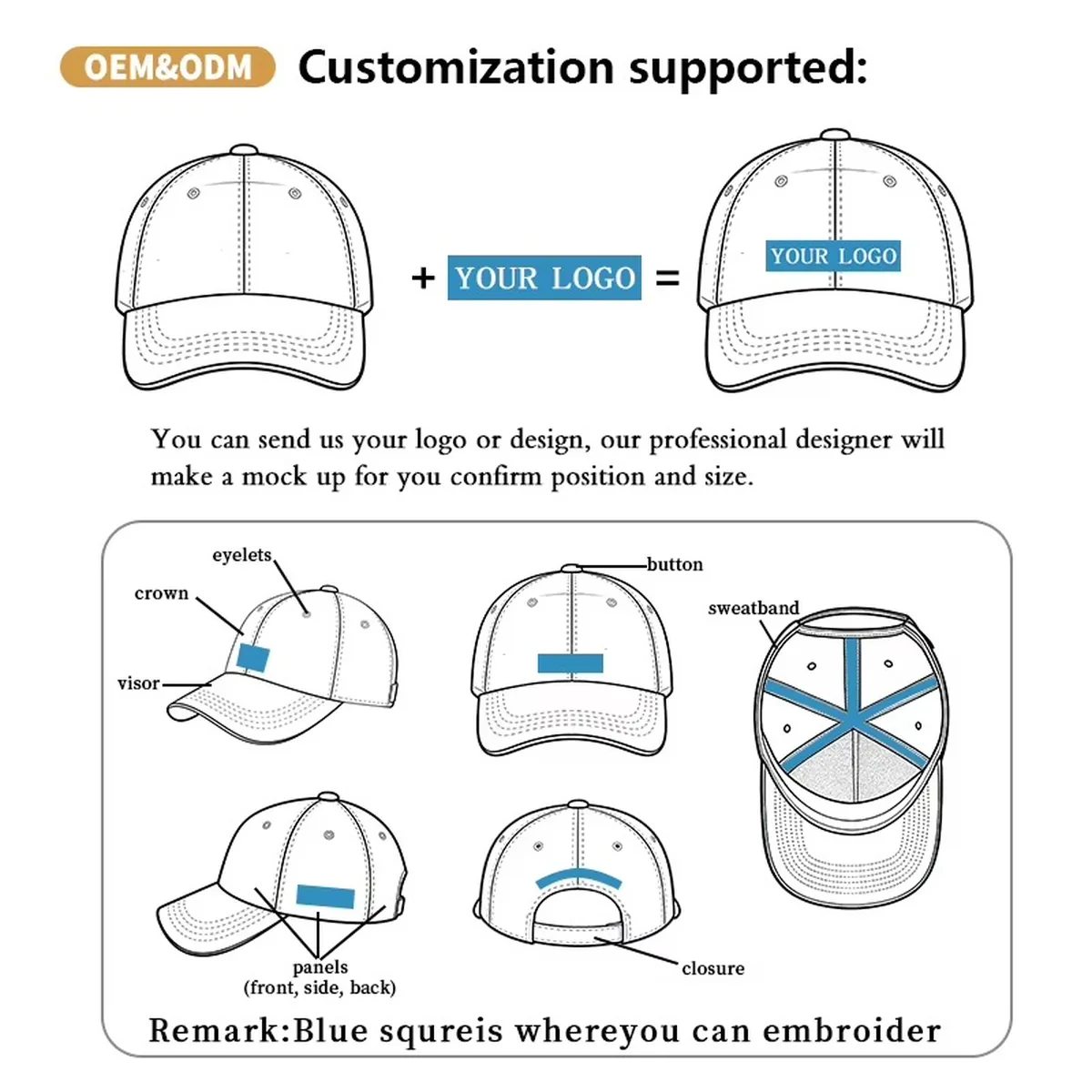
What the panel count actually controls
A cap crown is built from fabric panels sewn together. The number of panels decides where the seams fall, and the seams are what your eye reads as the shape of the cap.
On a 6-panel cap the front is split by a centre seam, giving two front panels of equal width. On a 5-panel cap the front is a single wide panel or a split pair, so the seam lines sit further out towards the sides and the front face is uninterrupted across the middle.
That single difference — one seam down the middle, or not — matters more than most buyers expect. It decides whether a wide wordmark can sit flat across the front without a stitch line running through it.
Choosing between 5-panel and 6-panel
Choose 6-panel when the cap has to look like a conventional baseball cap. It is the shape most corporate buyers, teams and event organisers picture when they order, and it is symmetric, so a centred logo sits evenly between the two front panels.
Choose 5-panel when the front logo is wide, or when you want a lower and more casual profile. A wide logo — a long brand name or a full-front wordmark — has an uninterrupted run of fabric to sit on, and the crown reads flatter and less formal.
If your artwork covers most of the front face, ask about a seamless 6-panel. The front seam is removed by bonding or laser cutting, so the logo sits on a single continuous surface. It costs more per cap, but it removes the compromise between the conventional shape and a clean print area.
What panel count does not change
Panel count does not decide the fabric, the closure or the crown height. Those are separate parameters, and buyers often confuse them — a "5-panel" is not automatically unstructured or low-crowned, and a "6-panel" is not automatically structured.
This is why a specification should state panel count and crown profile separately. "6-panel mid profile, structured, cotton twill, snapback" is a quotable spec. "Baseball cap" is not, because two factories will each guess differently and both will think they are right.
Buyer Risk Check
Where this project can go wrong
Committing to a wide logo before checking the seam
On a standard 6-panel, a wide wordmark is crossed by the centre seam. Check this before the artwork is finalised.
Assuming 5-panel means unstructured
Panel count and structure are separate. If you want a soft cap that packs flat, say unstructured explicitly.
Specifying only the style name
"Trucker cap" does not specify panel count, profile, fabric or closure. Left open, the factory chooses, and it may not be what you pictured.
Cap panel count — construction and what it changes
| Panels | Construction | Front logo area | Crown character | Typical use |
|---|---|---|---|---|
| 5-panel | Five panels, front is one wide panel or a split pair | One broad flat area — widest and tallest usable front space | Lower and flatter, casual, sits close to the head | Streetwear, camper caps, wide wordmark or full-front logos |
| 6-panel | Six panels, symmetric front pair with a centre seam | Two front panels with a centre seam — smaller than 5-panel but symmetric | The industry default; balanced height and shape | Baseball caps, trucker caps, corporate and event hats |
| 6-panel seamless | Six panels with a bonded or laser-cut front, no visible front seam | Continuous flat front with no seam line crossing the artwork | Same as 6-panel but a cleaner face | Full-front prints, sublimation, large detailed artwork |
| 7-panel / multi-panel | More panels, minor seams, rounder crown | Similar to 6-panel, often narrower | Rounded and closer-fitting | Specialty and fashion shapes; confirm per style |
Panel count decides the seam layout, how much flat front area you get for a logo, and how the crown sits. It is usually the first thing a buyer specifies.
Crown profile — height and structure
| Profile | Crown height | Structure | How it wears | Typical use |
|---|---|---|---|---|
| Low profile | Shallow, roughly 3.5 in / 89 mm | Usually unstructured | Sits low and close; soft, relaxed look | Dad hats, casual retail, garment-washed styles |
| Mid profile | Standard, roughly 4 in / 102 mm | Structured or unstructured | The balanced default that suits most wearers | Most corporate, promotional and team caps |
| High profile / high crown | Taller, roughly 4.5 in / 114 mm | Structured | More volume above the head; reads as streetwear | Flat-brim snapbacks, fashion and music merchandising |
| Unstructured (soft crown) | Varies | No buckram in the front panels | Collapses flat, packs well, soft against the forehead | Giveaways, travel, retail-soft looks, low-profile dad hats |
| Structured | Varies | Buckram-backed front panels | Holds a crisp shape, keeps a flat face for embroidery | 3D puff embroidery, trucker caps, premium corporate programs |
Profile is the crown height and whether the front panels are backed. Two caps with the same panel count and the same fabric can look completely different because of this.
Need a combination that is not listed? Send your specand we will confirm what the factory can hold before you commit.
What we confirm before production
Every order is quoted by the actual spec, sampled for approval, and checked against the approved sample before shipping.
Logo area checked against panels
We review your artwork width against the panel layout during quoting, so the seam problem surfaces before sampling.
Panel and profile stated separately
The confirmed spec sheet lists panel count and crown profile as separate lines, so nothing is assumed.
Seamless option quoted where it helps
If your logo covers most of the front, we will quote the seamless front so you can compare it properly.
Sample before bulk
The physical sample is where you confirm the panel layout reads the way you intended.
Common questions
Often slightly, because there are fewer cut pieces and fewer seams. The difference is usually smaller than the gap between fabric options or decoration methods.
It can, but the centre seam will run through it. If the artwork is wide and detailed, a 5-panel or a seamless 6-panel front gives a cleaner result.
A 6-panel cap whose front seam has been removed by bonding or laser cutting, leaving a continuous flat face. It keeps the familiar six-panel shape but gives a full unbroken print area.
No. Crown height is a separate parameter. A 5-panel cap can be built with a mid or high crown — it is just less common.
Both are produced. The 6-panel mesh back is the classic trucker; a 5-panel version reads a little more casual and modern.
You can approve a sample of the specification you are considering. If you are genuinely undecided between two panel layouts, tell us and we will advise which one suits your artwork.
It affects the usable flat area, not the stitch capability. The practical limit is how much of the front face your logo can cover without crossing a seam.
Ready to quote this project?
Send your cap style, logo, quantity and destination. We will reply with MOQ, unit price, sample details and shipping options.
The full parameter reference: panels, profile, back, closure, bill, fabric and decoration.
Custom 6-Panel CapsThe conventional baseball cap shape, structured or unstructured.
Custom 5-Panel CapsA wide front face and a flatter, more casual crown.
Custom Mesh Trucker HatsPanel layout plus a mesh back for breathability.
Decoration CompatibilityWhich decoration method suits your front panel and fabric.
Request a QuoteSend your artwork width and preferred style.