B2B Buying Guide
Cap Closures: Snapback, Strapback, Elastic and Fitted
The closure is the most commercial decision on a custom cap. It decides how many head sizes one cap covers, which decides whether you order one size or forecast a size run — and therefore how much unsold stock you are exposed to.
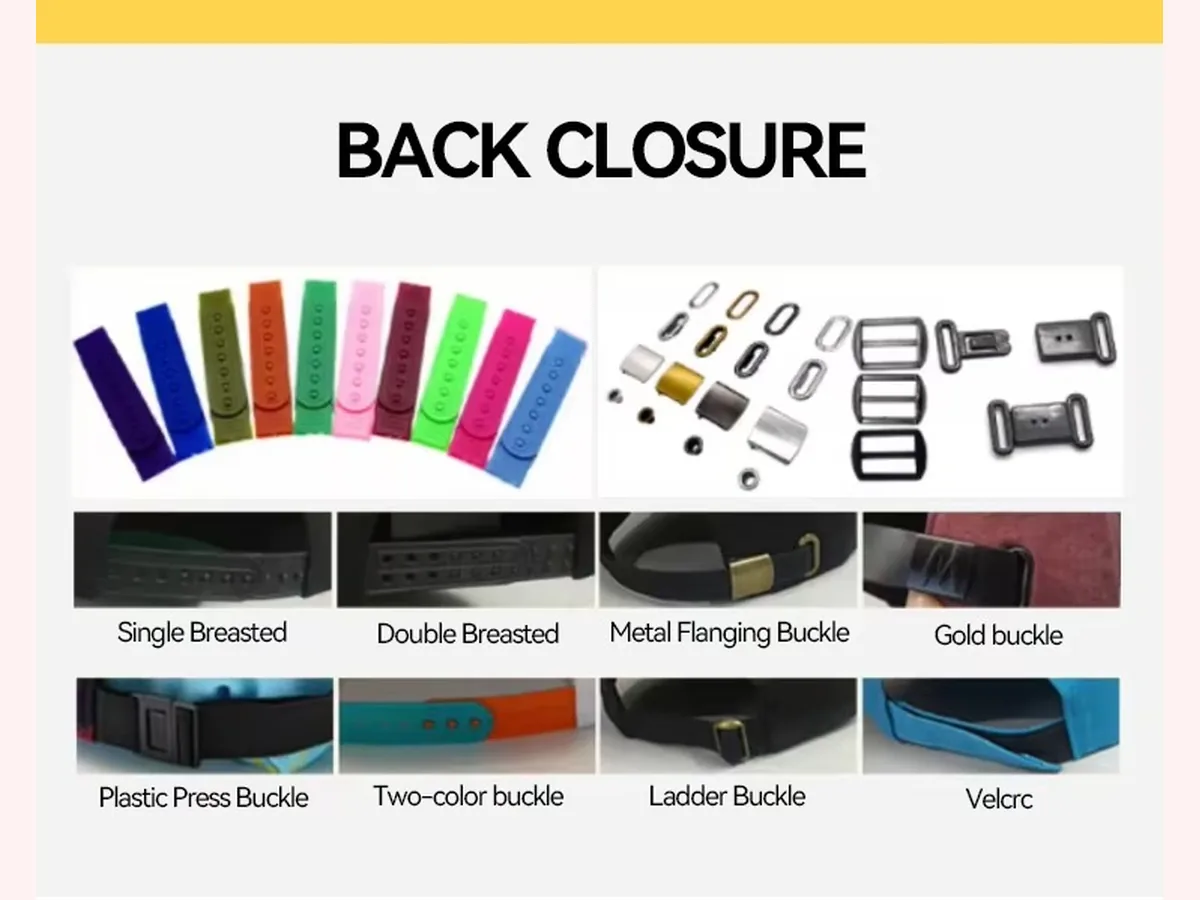
Why the closure is a commercial decision, not a detail
A cap with an adjustable closure is, in practice, one size. Order 500 pieces and you receive 500 caps that each fit most adult heads. Nothing has to be forecast, and nothing is left over in an odd size.
A fitted cap is the opposite. There is no closure, so each cap is made to one size. Order 500 pieces and you must decide in advance how many are 7, how many are 7 1/4, how many are 7 3/8. Get that split wrong and the leftover sizes are the ones nobody wants.
That is the real cost of a fitted program. The cap itself may be nicer, but you are taking on a forecasting risk that an adjustable cap does not carry.
The adjustable options and how they read
A plastic snapback is the workhorse. It adjusts across the widest range, it is inexpensive, and it is what most corporate, event and promotional buyers expect. Its only downside is that it reads as a promotional cap rather than a premium one.
A metal snap or a strapback with a metal slide moves the same function upmarket. The fit range is similar; what changes is the perceived quality of the hardware. For retail and fashion programs this is often the right trade.
Hook and loop adjusts quickly and costs little, but it is the closure buyers associate most strongly with giveaway caps. Elastic bands take no adjustment at all, which means a narrower fit range per cap and a real risk if your audience spans a wide size range — particularly with youth programs.
When a fitted cap is the right answer
Fitted caps are worth the forecasting risk when the cap is part of a uniform or an on-field kit, where consistent fit matters and the audience is known. Team programs and premium retail programs are the usual cases.
If you go fitted, plan the size run deliberately. The size chart in the table below converts head circumference to cap size, and the most common adult size sits in the middle of the range. If you tell us the audience, we will suggest a split rather than leaving you to guess.
For everything else — events, giveaways, corporate gifting, mixed-age groups — an adjustable closure removes a whole category of risk for no real loss.
Buyer Risk Check
Where this project can go wrong
Guessing a fitted size run
The wrong split leaves you holding the sizes nobody wanted while the popular sizes sell out first.
Elastic for a mixed-age audience
An elastic band covers a narrower range than a snapback. For youth and adult orders in one run, that is a real constraint.
Choosing hardware that undercuts the price point
On a premium retail cap, a plastic snapback can undo the impression the fabric and decoration just created.
Closure types — fit range and stock risk
| Closure | How it works | Approximate fit range | Stock risk | Typical use |
|---|---|---|---|---|
| Plastic snap (snapback) | Moulded plastic strap with snap positions | Widest — one cap covers most adult head sizes | Lowest — one size covers the order | Most promotional, corporate and event programs |
| Metal snap | Metal strap and snaps, often antique finish | As above | Low, with a premium look | Premium retail and fashion caps |
| Strapback | Fabric strap with a metal slide or buckle | Wide, with an adjustable fabric tail | Low | Dad hats, retail soft-crown caps, casual programs |
| Hook and loop | Velcro-style closure | Wide | Low, but reads as lower cost | Giveaways and budget promotional orders |
| Elastic / stretch band | No adjustment; the band stretches | Moderate — a narrower range per cap | Higher — sizes cannot be fine-tuned after production | Sport caps, youth programs, one-size retail |
| Fitted (sized) | No closure; the cap is made to a specific size | One size per cap | Highest — you must forecast a size run before production | Premium fitted programs, on-field team caps |
Closure choice decides how many head sizes one cap covers. That is why it drives both your unit cost and your leftover inventory.
Fitted cap sizes against head circumference
| Size | Head circumference (in) | Head circumference (cm) | Usual audience |
|---|---|---|---|
| 6 3/8 | 20 1/4 | 51.5 | Youth / small adult |
| 6 1/2 | 20 3/4 | 52.7 | Youth / small adult |
| 6 5/8 | 21 1/8 | 53.7 | Small adult |
| 6 3/4 | 21 1/2 | 54.6 | Small adult |
| 6 7/8 | 21 7/8 | 55.6 | Small to medium adult |
| 7 | 22 1/4 | 56.5 | Medium — the most common size |
| 7 1/8 | 22 5/8 | 57.5 | Medium adult |
| 7 1/4 | 22 3/4 | 57.8 | Medium to large adult |
| 7 3/8 | 23 1/4 | 59.1 | Large adult |
| 7 1/2 | 23 5/8 | 60 | Large adult |
| 7 5/8 | 24 | 61 | Extra large adult |
| 7 3/4 | 24 3/8 | 61.9 | Extra large adult |
| 8 | 25 1/8 | 63.8 | Extra large / oversize |
Use this to plan a size run. Adjustable caps avoid the problem entirely; fitted caps do not, so the split has to be forecast before production.
Need a combination that is not listed? Send your specand we will confirm what the factory can hold before you commit.
What we confirm before production
Every order is quoted by the actual spec, sampled for approval, and checked against the approved sample before shipping.
Closure matched to audience
We ask who is wearing the cap before recommending a closure, because the answer changes the recommendation.
Size run planning
For fitted programs we help structure the size split instead of leaving it to guesswork.
Risk stated up front
If your order carries inventory risk, we say so at quotation rather than after production.
Sample confirms the feel
Closure hardware is something you have to handle. The sample is where you approve it.
Common questions
A plastic snapback. It covers the widest range of head sizes with one cap, which means no size forecast and no leftover stock.
The cap itself can be similar, but a fitted order carries forecasting risk. If your size split is wrong, the cost shows up as unsold inventory rather than on the invoice.
Most adult head sizes. That is precisely why it dominates promotional and corporate work — one cap fits nearly everyone in the order.
Both are adjustable. A snapback uses a moulded plastic or metal strap with snap positions; a strapback uses a fabric strap with a metal slide or buckle, which reads slightly more premium.
Yes. Leather straps and metal buckles are available and are common on premium and fashion caps. Confirm the strap material on the specification.
They can be, but the fit range per cap is narrower. If one order covers children and adults, an adjustable strap usually serves the whole group better.
Use the size chart to convert head circumference to size, then weight the split towards the sizes at the centre of the range. Tell us the audience and we will suggest a split.
Only indirectly. The closure occupies the back opening, which is why back-panel logos usually sit above it rather than beside it.
Ready to quote this project?
Send your cap style, logo, quantity and destination. We will reply with MOQ, unit price, sample details and shipping options.
The full parameter reference for custom caps.
Hat Size GuideSizing, fitted size runs and youth fit planning.
Custom Fitted HatsSized caps for premium and on-field programs.
Custom Snapback HatsThe adjustable default for most B2B orders.
Custom Dad HatsLow crown with a strapback closure.
Request a QuoteTell us the audience and we will recommend a closure.